.webp)
The Racing Playbook: How to Outrun Rivals and Claim Victory in Sonic Racing
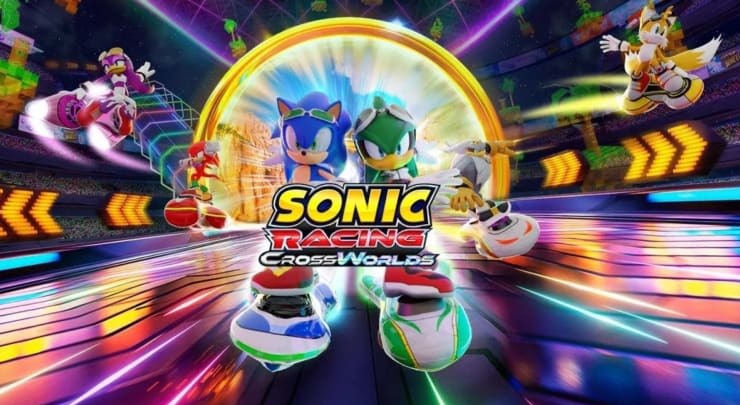
Sonic Team Racing and the broader Sonic racing franchise stand out as some of the most exhilarating, high-speed arcade racers in modern gaming history. Combining classic arcade mechanics with deep team-based dynamics, intricate drift chains, item management, and complex track shortcuts, mastering a Sonic racing game requires far more than just holding down the accelerator. Whether you are navigating tight hairpin turns in Sonic & All-Stars Racing Transformed or coordinating team Ultimate Attacks in Team Sonic Racing, executing precise driving techniques is the true secret to standing atop the podium. This comprehensive guide walks you step-by-step through every phase of a race—from pre-race setup to advanced high-tier maneuvers—teaching you how to optimize your driving style, outsmart your rivals, and consistently claim victory across every grand prix.
1. How to Choose the Right Character and Vehicle Class Before the Race
Before stepping onto the starting grid, your first critical decision is selecting a character and vehicle combination that aligns with your individual playstyle and the specific requirements of the track. Characters in Sonic racing titles are traditionally categorized into distinct classes: Speed, Technique, Power, and Acceleration. Speed characters boast high top-end velocity, making them ideal for long straightaways, while Technique types possess superior handling skills that allow them to hug inner corners effortlessly without drifting off the track. Power characters can smash through obstacles without losing momentum, while Acceleration characters recover instantly from spin-outs and item hits.
To maximize your performance, you must customize your vehicle parts to offset your character's natural weaknesses or double down on their key strengths. For instance, equipping a Speed character with handling modifications ensures they do not fly off tight ledges, whereas augmenting a Power character's boost duration allows them to bully their way past opponents while maintaining high momentum. Before entering a grand prix, review the track layout carefully—drafting a Technique character for winding mountain courses and a Speed build for wide open highways ensures you enter the race with a distinct competitive advantage.
Pre-Race Setup Strategy
Selecting the optimal racer and vehicle loadout lays the blueprint for race success.
Class Selection Matrix
- Speed Class (e.g., Sonic, Shadow): Highest maximum top speed; ideal for wide tracks with long straight sections.
- Technique Class (e.g., Tails, Wave): Superior steering precision and off-road movement; best for complex tracks with sharp turns.
- Power Class (e.g., Knuckles, Vector): High defensive resilience and obstacle immunity; excels at clearing track hazards.
- Acceleration Class (e.g., Amy, Cream): Rapid recovery speed after taking item damage; ideal for aggressive, item-heavy lobbies.
2. How to Execute a Perfect Starting Boost Off the Grid
Securing an early lead right at the beginning of the race prevents you from getting caught in the chaotic crossfire of mid-pack item battles. Executing a Starting Rocket Boost requires precise timing on the accelerator during the pre-race countdown sequence. Pressing the accelerator button too early will cause your tires to burn out, leaving your vehicle temporarily stalled as the rest of the fleet zooms past. Conversely, pressing it too late results in a sluggish start with zero momentum boost.
To nail the Perfect Starting Boost, watch the countdown timer closely. In most Sonic racing games, you need to rhythmically tap or hold the accelerator exactly as each countdown number appears on screen—typically timing your final hold right as the prompt hits "1" or "GO!". Achieving a Level 3 Start Boost launches your kart forward with maximum initial velocity, allowing you to secure the inside lane at the very first corner and dictate the pace of the race from the opening second.
Countdown Launch Protocol
Mastering the launch timing ensures you enter the first corner ahead of the competition.
Rocket Start Execution Sequence
- Watch the Screen Prompts: Align your visual focus strictly on the numerical countdown display.
- Rhythmic Acceleration: Press and release the accelerator button in sync with the count prompts (3... 2... 1...).
- Final Charge Hold: Depress the accelerator fully on the final beat right before the green signal.
- Secure Inside Line: Immediately steer toward the inner track wall to block trailing opponents.
3. How to Master Drift Boosting and Multi-Tier Spark Stacking
Drifting is the foundational driving mechanic in any high-level Sonic racing game. Rather than slowing down for sharp turns, initiating a drift allows you to slide through corners smoothly while actively building up drift boost charge levels. To start a drift, turn your vehicle sharply into the direction of the bend while holding down the drift brake button. As your vehicle slides sideways, sparks will begin to fly from your rear wheels, signaling that your boost reservoir is filling up.
Sonic racing titles feature multi-tier drift spark mechanics, usually categorized into Blue (Level 1), Orange (Level 2), and Purple/Pink (Level 3) sparks. To stack higher spark tiers, you must prolong your drift angle across extended curves by counter-steering—adjusting your steering stick back and forth to maintain the drift trajectory without slamming into outer walls. Releasing the drift brake button when the sparks reach maximum intensity triggers an explosive speed boost that propels your kart down the next straightaway.
Drift Arc Optimization
Understanding spark tiers allows you to extract maximum speed out of every turn.
Drift Tier Breakdown
- Tier 1 Drift (Blue Sparks): Requires a brief drift duration; yields a small, quick speed burst suitable for minor bends.
- Tier 2 Drift (Orange Sparks): Moderate drift duration; grants a substantial speed boost that maintains momentum through medium turns.
- Tier 3 Drift (Purple Sparks): Extended drift hold; delivers a massive, long-lasting rocket boost perfect for sweeping turns.
- Counter-Steer Technique: Gently feather the directional stick in the opposite direction to prevent over-rotating into inner walls.
4. How to Perform Air Tricks and Stunts for Free Speed Off Ramps
Airborne time in Sonic racing games is not just visual flair—it is a vital resource for generating free momentum. Whenever your vehicle leaves the ground via jump ramps, track drops, or terrain bumps, you have a brief window to execute aerial tricks. Performing airborne tricks rewards you with a instant trick boost upon touching down back onto the track surface, rewarding creative aerial maneuvering with raw speed.
To execute air tricks, flick your right directional stick (or motion controls, depending on your hardware) in any cardinal direction while your kart is airborne. Performing a single trick guarantees a basic Level 1 landing boost. However, if you are launching off high cliffs or massive booster ramps, you can chain multiple tricks together—flicking the stick Left, Right, Up, or Down in quick succession to charge Level 2 or Level 3 landing boosts. Just ensure your vehicle fully finishes its stunt rotation before your wheels hit the ground, as landing mid-flip will cause a severe wipeout.
Airborne Stunt Execution
Chain tricks seamlessly during jump sequences to double your boost output.
Stunt Control Guidelines
- Ramp Launch Awareness: Prepare your thumb on the stunt stick the moment your vehicle touches a boost ramp.
- Directional Flicking: Flick the stunt stick in distinct directions to chain separate tricks mid-air.
- Rotation Timing: Stop trick inputs well before touching down so your vehicle levels out parallel to the road.
- Landing Boost Alignment: Straighten your steering immediately upon landing to direct your bonus boost forward.
5. How to Utilize Wisps and Offensive Items Efficiently
Wisps and power-up capsules scattered across the track serve as the primary offensive and defensive tools in Sonic racing games. Obtaining an item is as simple as driving through glowing item capsules, but using them effectively requires strategic patience. Novice players often make the mistake of firing items the exact moment they acquire them, wasting valuable offensive utilities into wall corners or empty space.
To maximize item efficiency, learn the ideal application for each Wisp type. Offensive items like the Crimson Eagle or Orange Rocket should be saved until you have a clear sightline on an opponent directly ahead, preferably right before they enter a jump or drift corner where a hit causes maximum time loss. Defensive items like the Blue Cube or Jade Ghost should be held behind your kart to shield incoming projectiles, especially when holding a leading position in 1st place.
Wisp Tactical Management
Deploy offensive and defensive items strategically to control race pacing.
Key Wisp Functionality
- Crimson Eagle / Homing Missile: Locks onto frontward targets; best fired on long straightaways with zero obstacle obstruction.
- Blue Cube / Mine: Deployed behind your kart to block incoming rear attacks or block narrow track choke points.
- Yellow Drill: Grants invulnerability and high-speed automated steering; ideal for recovering after getting hit.
- Jade Ghost: Renders your kart invisible, passes through obstacles, and steals an item from a nearby rival.
6. How to Coordinate Team Mechanics and Ultimate Attacks in Team Racing
In team-centric Sonic racing entries like Team Sonic Racing, winning is not determined solely by who crosses the finish line first, but by the combined points of your entire three-car team. Therefore, selfish driving will ultimately lead to overall team defeat. Mastering team mechanics—such as Item Skimstreams, Line Dashers, and Item Transfers—is essential for dragging struggling teammates up the leaderboards.
When driving ahead of a teammate, your kart leaves behind a bright yellow energy trail known as a Slingshot Line. Teammates riding in this stream charge up a high-speed Line Dash that launches them past you. Furthermore, if a teammate is hit by an item, driving close past them triggers a Skimstream Boost, instantly restoring their full speed. All these cooperative actions charge up your shared Team Ultimate Bar. Once filled, activating the Team Ultimate Attack grants all three teammates temporary invulnerability and extreme speeds, plowing through the fleet to secure a podium sweep.
Cooperative Team Tactics
Work in unison with your teammates to fill the Ultimate Meter rapidly.
Team Action Checklist
- Provide Slingshot Lines: Lead teammates by driving smooth, predictable paths so they can draft behind your light trail.
- Perform Skimstreams: Drive directly alongside spun-out teammates to give them an immediate restart boost.
- Transfer Wisps: Pass unused items to teammates who need defensive cover or offensive firepower.
- Simultaneous Ultimate Trigger: Coordinate with your team to activate Team Ultimates during high-density pack moments.
7. How to Discover and Take Advantage of Track Shortcuts
Track knowledge is often the key differentiator between casual drivers and competitive speedrunners. Every course in a Sonic racing game is filled with hidden paths, alternative routes, and high-risk shortcuts designed to slice precious seconds off your lap times. Some shortcuts are completely open and accessible to all players, requiring only tight steering and precise spatial awareness to navigate successfully.
However, many of the fastest shortcuts are hidden behind off-road terrain, such as mud patches, grass fields, or wooden barricades that slow down standard vehicles. To take advantage of off-road shortcuts, you must save speed boosts—such as White Boost Wisps, Drift Boosts, or Technique class passive traits—to power through the slowing terrain without dropping speed. Memorizing where these hidden off-road cut-throughs reside across every lap enables you to pull off dramatic last-second passes before the finish line.
Shortcut Execution Strategy
Identify and execute high-yield shortcuts to cut overall lap times.
Shortcut Identification Table
- Open Alternate Paths: Elevated side routes that require precise jumping or drifting to access cleanly.
- Off-Road Cuts: Grass, dirt, or water patches that require an active Wisp boost or Technique class vehicle to cross.
- Destructible Walls: Wooden crates or cracked walls that can be smashed through using Power characters or Drill Wisps.
- Transformative Portals: Track-shifting transitions in Transformed games requiring smooth aerial or water entry angles.
8. How to Adapt to Dynamic Track Transformations (Land, Sea, and Air)
In titles like Sonic & All-Stars Racing Transformed, tracks are dynamic, evolving environments that change drastically across consecutive laps. Your vehicle automatically morphs between a car, a speed boat, and a jet plane depending on whether you are driving on asphalt, skimming across churning ocean waves, or flying through open skies. Each vehicle form operates on entirely unique handling physics and control schemes that require instant mental adaptation.
When transitioning into water mode, expect heavier vehicle momentum and dynamic wave physics; hitting wave crests at full speed grants extra opportunities for stunt boosts. When morphing into flight mode, you gain full pitch and yaw controls, allowing you to fly through floating boost rings and barrel-roll out of the way of incoming air hazards. Practicing seamless vehicle transitions ensures that dynamic track collapses never disrupt your driving rhythm or momentum.
Multi-Vehicle Control Adaptation
Master the distinct physics of Land, Sea, and Air transformations to maintain top speeds.
Transformation Handling Rules
- Car Form (Land): Focus strictly on drift spark stacking and tight cornering along asphalt roads.
- Boat Form (Sea): Lean into water waves to launch off crests, executing stunt flips off turbulent swells.
- Plane Form (Air): Use pitch controls to navigate altitude changes and execute barrel rolls to dodge floating obstacles.
- Smooth Entry Angles: Enter transformation portals in a straight line to avoid crashing upon switching vehicle physics.
9. How to Implement Defensive Driving Techniques and Guard Your Lead
Once you secure 1st place in a race, keeping that position requires a shift from aggressive chasing to defensive protection. Front-runners are constantly targeted by trailing opponents equipped with homing projectiles, area-of-effect blasts, and global catch-up items. Driving defensively ensures that a single incoming hit does not ruin a perfect lap lead.
Always maintain a defensive item behind your vehicle. Holding down the item deployment button allows you to drag items like mines, spikes, or shield cubes directly behind your rear bumper, acting as a physical shield against incoming homing missiles. Additionally, keep a close eye on your rear-view mirror display. If you see a rival preparing to overtake you via your draft stream, break their drafting line by weaving across the track to deny them free slipstream speed.
Lead Maintenance Protocol
Protect your lead position against aggressive catch-up items and trailing rivals.
Defensive Driving Checklist
- Rear Shielding: Hold defensive Wisps behind your kart to absorb incoming homing attacks automatically.
- Deny Slipstreams: Weave unpredictably on straightaways to prevent rear karts from building drafting boosts off your tail.
- Hug Inner Walls: Drive tight inner lines during corners to force trailing opponents to take longer outer paths.
- Track Hazard Placement: Drop rear mines directly onto narrow bridges or boost pads to trap oncoming drivers.
10. How to Master Advanced Tech: Ring Management, Slipstreaming, and Snaking
To dominate high-level competitive online lobbies, you must incorporate advanced driving techniques that extract every possible micro-second of speed out of your vehicle. Ring collection is one of the most underutilized mechanics in the game. Collecting gold Rings scattered across the track passively increases your vehicle's maximum overall top speed up to a cap of 10 Rings. Prioritizing ring collection on Lap 1 guarantees your vehicle operates at maximum speed cap for the remainder of the race.
Furthermore, master the art of Slipstreaming (drafting) and Drift Snaking. Slipstreaming involves positioning your front bumper directly behind a leading opponent's vehicle for a few seconds to build up a draft stream, which triggers a high-speed slingshot pass. On long, wide straightaways where no turns exist, perform "Snaking"—alternating rapid left and right drift boosts continuously down straight roads to maintain permanent drift boost speeds even without natural corners.
Advanced High-Speed Tech
Integrate expert-level driving mechanics to outpace competitive online opponents.
Advanced Tech Blueprint
- Max Out Rings Early: Collect 10 gold Rings on Lap 1 to permanently raise your kart's maximum top speed ceiling.
- Draft Slingshotting: Tail closely behind lead opponents on straight paths to trigger automatic drafting passes.
- Straightaway Snaking: Alternate quick Level 1 drift boosts left and right along wide straightaways.
- Brake Tapping: Tap the brake button briefly mid-drift on tight hairpin turns to prevent sliding into outer walls.
Mastering Sonic racing games comes down to executing the perfect blend of driving precision, mechanics management, item strategy, and track familiarity. By choosing the right vehicle build, executing rocket starts, chaining multi-tier drift boosts, utilizing team mechanics, and driving defensively in 1st place, you can conquer any track layout in the franchise. Put these techniques into practice, take the wheel, and lead your team to victory on the track!