How to Beat High-Difficulty Levels in Match Factory: An Advanced Strategy Guide for Consistent Wins
In Match Factory, one of the biggest challenges players face is not learning how to match objects—it is learning how to consistently clear high-difficulty levels without relying heavily on boosters.
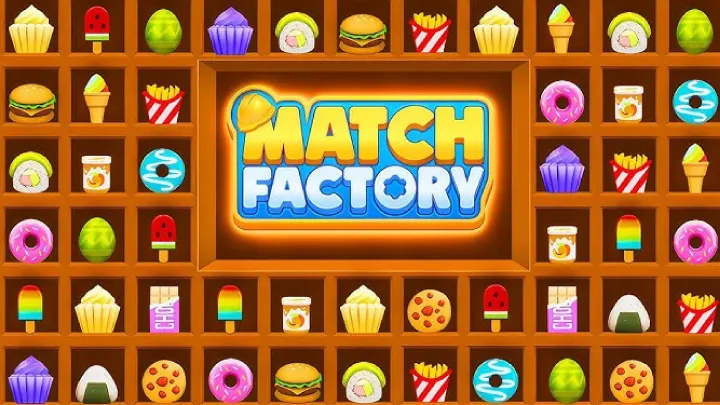
Many players progress smoothly through the early and mid-game stages only to encounter levels where object density increases dramatically, visual clutter becomes overwhelming, timers feel restrictive, and mistakes become increasingly costly. At this point, success is no longer determined by fast tapping alone. Instead, victory depends on observation efficiency, target prioritization, board management, and decision-making under pressure.
This guide focuses deeply on one specific "How To" issue: how to systematically clear difficult Match Factory levels by improving object recognition, board control, and timer management. Rather than discussing beginner mechanics, this article examines the advanced strategies used by experienced players to overcome difficult stages consistently.
Understanding Why Difficult Levels Feel Different
Many players assume difficult levels simply contain more objects.
In reality, the game increases challenge through several overlapping systems.
The hidden difficulty factors
Hard levels often include:
- Similar-looking objects
- Multiple object layers
- Reduced visibility
- Complex board layouts
- Increased timer pressure
Why players fail repeatedly
The primary issue is usually not speed.
Instead, players lose efficiency because they spend too much time searching.
Key insight
The goal is not to move faster. The goal is to spend less time thinking about where objects are located.
Building a Winning Plan Before Making Your First Match
Most players start matching immediately.
Advanced players spend a few seconds studying the board first.
Initial board assessment
Before matching anything, identify:
High-visibility groups
Objects that are immediately recognizable.
Hidden clusters
Items partially covered by upper layers.
Problem objects
Rare items that appear only a few times.
Why planning matters
The first twenty seconds often determine whether the level becomes manageable later.
Common mistake
Many players clear obvious objects randomly and accidentally create difficult searches near the end.
Learning Object Prioritization Instead of Random Matching
Not all objects should be matched equally.
Priority Level 1: Rare objects
Rare items should usually be cleared first.
Why?
Because searching for a final hidden object late in a run wastes valuable time.
Priority Level 2: Layer-blocking objects
These objects hide large sections of the board.
Removing them increases visibility.
Priority Level 3: Common objects
These can usually wait until later.
Advanced rule
The harder an object is to find, the earlier it should be removed.
How to Clear Multi-Layer Boards Efficiently
Multi-layer boards are responsible for many late-game failures.
Why layers are dangerous
Layers reduce information.
Players cannot make good decisions when large portions of the board remain hidden.
Layer-clearing strategy
Focus on vertical openings
Create viewing windows into deeper layers.
Avoid scattered clearing
Removing random pieces across the board creates confusion.
Recommended approach
Work section by section rather than clearing the entire board evenly.
Key insight
Visibility creates efficiency.
Efficiency creates time.
Managing Timer Pressure Without Panicking
One of the most common reasons players lose difficult levels is panic.
What panic causes
Players begin:
- Misclicking objects
- Ignoring strategy
- Switching targets constantly
How to control timer pressure
Divide the timer mentally
Think in phases rather than one large countdown.
Example:
- Early game
- Mid game
- Final cleanup
Why this works
Breaking the timer into segments reduces psychological stress.
Important principle
The clock becomes dangerous only when players stop making efficient decisions.
Creating Search Patterns That Reduce Visual Overload
Visual clutter is one of the biggest challenges in Match Factory.
Common searching mistake
Players scan the entire screen repeatedly.
This wastes enormous amounts of time.
Better search method
Develop a consistent pattern:
Top-to-bottom scanning
Move systematically downward.
Left-to-right scanning
Check sections methodically.
Benefits
- Faster object recognition
- Fewer missed matches
- Less mental fatigue
Advanced insight
Professional puzzle players rarely search randomly.
They use repeatable visual systems.
Using Board Control to Prevent Endgame Disasters
Many levels are lost during the final minute.
Why endgames become difficult
Players leave:
- Rare objects
- Hidden objects
- Difficult sections
for later.
Strong endgame preparation
Remove troublesome objects early.
Maintain board visibility throughout the level.
Endgame objective
By the final phase, only simple matches should remain.
Key principle
The best endgames are boring because all major problems were solved earlier.
Knowing When to Use Boosters and When to Save Them
Boosters are valuable resources.
However, many players waste them inefficiently.
Poor booster usage
Using boosters immediately after small mistakes.
Smart booster usage
Use boosters when:
Information is limited
The board becomes difficult to read.
Time efficiency matters
A booster can save more time than manual searching.
Booster hierarchy
- Save the run
- Recover momentum
- Create visibility
Advanced strategy
Treat boosters as strategic tools, not panic buttons.
Mastering the Final Thirty Seconds
The final thirty seconds often determine success.
Common mistakes
Players begin rushing.
This causes:
- Missed objects
- Incorrect selections
- Poor prioritization
Final phase strategy
Focus on remaining rare objects
They usually create the largest delays.
Ignore perfection
Focus only on completion.
Mental adjustment
At this stage, efficiency matters more than elegance.
Key insight
A completed level with mistakes is better than a perfect strategy that runs out of time.
Building a Long-Term Improvement System
Winning difficult levels consistently requires training.
After each failed attempt, ask:
What consumed the most time?
Searching?
Movement?
Hidden objects?
Where did panic begin?
Understanding emotional triggers is important.
Create a review habit
Analyze:
- Board sections that caused problems
- Object categories that slowed progress
- Timer management mistakes
Why improvement works
Patterns emerge quickly.
Most players fail for the same reasons repeatedly.
Turning Difficult Levels Into Predictable Challenges
The ultimate goal is predictability.
Signs of an advanced player
They recognize:
- Layer patterns
- Object placement tendencies
- Difficulty structures
before problems occur.
Long-term mastery checklist
- Prioritize rare objects
- Open visibility early
- Use structured search patterns
- Manage timer pressure
- Preserve boosters intelligently
- Simplify endgames
Final insight
High-level Match Factory play is less about speed and more about information management. The player who controls information usually controls the outcome of the level.

Conclusion
Mastering difficult Match Factory levels requires much more than quick reflexes or fast tapping. The most successful players approach each level strategically, prioritizing rare objects, opening hidden layers early, maintaining visibility, and controlling timer pressure through efficient decision-making. By developing structured search patterns, preparing for the endgame from the beginning of the level, and using boosters intelligently rather than emotionally, players can dramatically increase their success rate on challenging stages. Over time, difficult levels stop feeling unfair and instead become predictable puzzles that reward planning, observation, and consistency.