 h5gamespot.com
Death Stranding Review: The Long Walk Between People
A World That Makes Every Step Mean Something
There is a particular kind of loneliness in Death Stranding that is difficult to find in other video games. It is not the loneliness of standing in an abandoned building or exploring a world where every living thing has disappeared. It is the loneliness of knowing that other people exist somewhere beyond the horizon, yet having no easy way to reach them.
Mountains rise between settlements. Rivers cut through narrow valleys. Rain threatens to destroy the cargo you have spent hours protecting. Your destination may appear close on the map, but the journey can turn into a difficult expedition involving steep slopes, unstable ground, and limited supplies. Even when the world is technically open to exploration, it rarely feels welcoming.
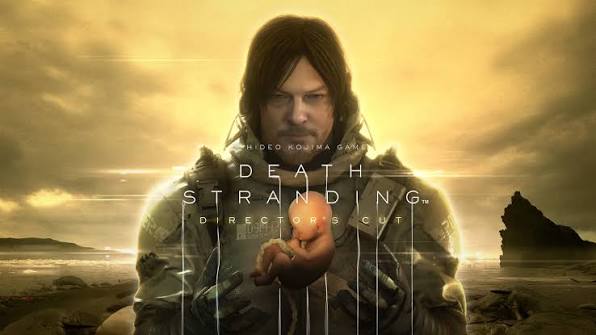
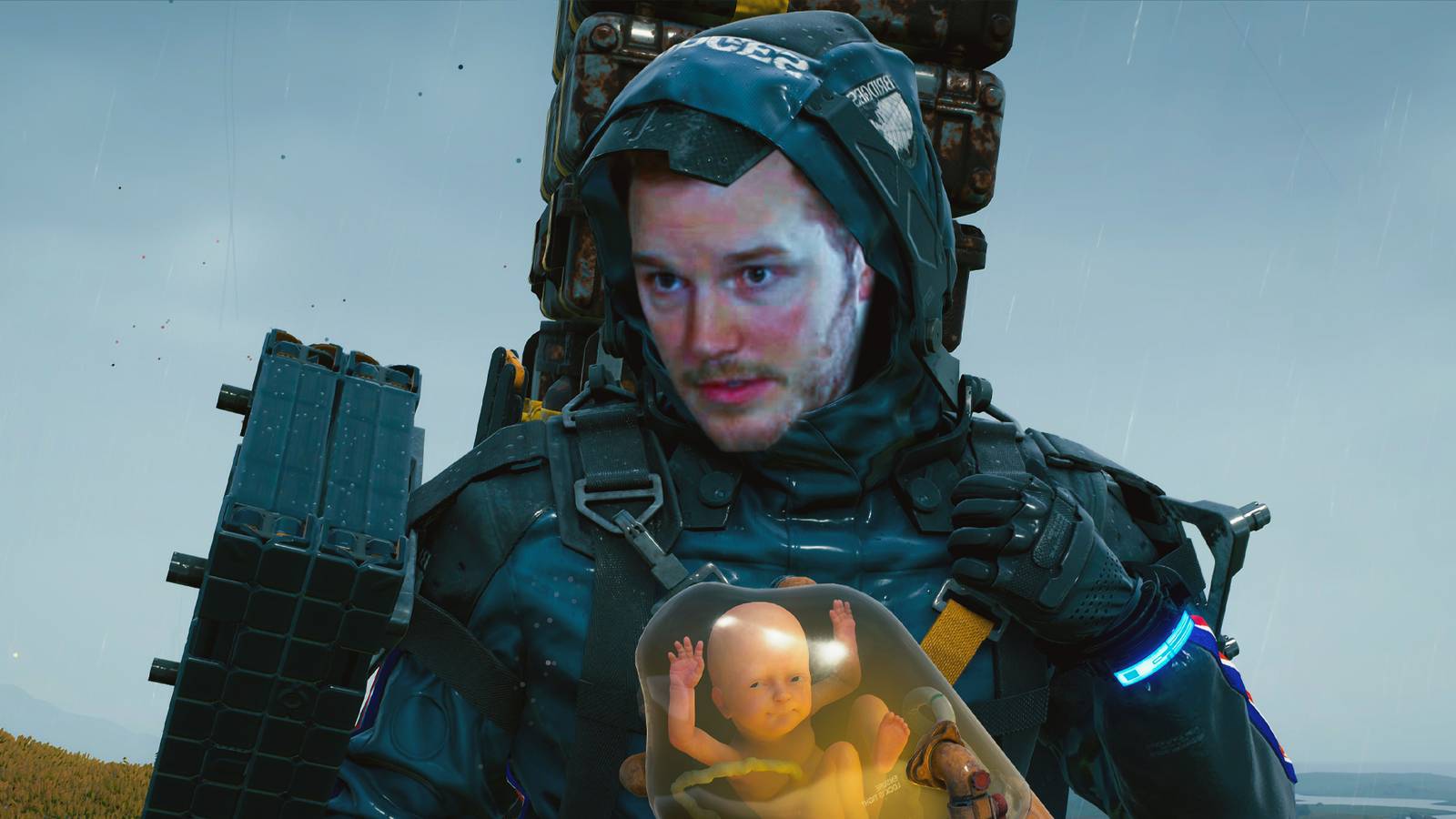
At the center of this strange landscape is Sam Porter Bridges, a deliveryman tasked with reconnecting the scattered communities of a broken America. His job sounds simple: carry packages from one location to another. Yet the more time you spend walking through the world, the more that ordinary responsibility begins to carry emotional weight.
Death Stranding is an unusual game because it asks players to find meaning in activities that other games often treat as obstacles between important moments. Walking is not merely transportation. Carrying cargo is not simply inventory management. Building a bridge is more than a convenient way to cross a river.
Every journey becomes a negotiation between isolation and connection.
Developed by Kojima Productions and directed by Hideo Kojima, Death Stranding is a divisive experience precisely because it refuses to follow many familiar rules of action-adventure design. Its world is enormous, but combat is not always the main attraction. Its story contains supernatural mysteries, but its most memorable moments can involve nothing more than reaching a delivery terminal after a difficult climb.
For some players, this approach creates a deeply absorbing experience. For others, the slow pace, repeated deliveries, and elaborate systems can become exhausting.
Both reactions make sense. Death Stranding is not interested in making every moment exciting. Instead, it attempts to make the ordinary act of moving through a hostile world feel significant.
And surprisingly often, it succeeds.

The End of the World Is Also the Beginning of a Journey
The world of Death Stranding has been devastated by a mysterious catastrophe known as the Death Stranding. The event has fundamentally changed the relationship between the living and the dead, introducing supernatural phenomena that make ordinary life dangerous.
Among the consequences are the appearance of BTs, mysterious entities associated with the dead, and Timefall, a strange form of precipitation that rapidly ages whatever it touches. Human settlements have become isolated, and traveling between them is no longer a routine part of daily life.
America survives in fragments.
People live in underground facilities, isolated distribution centers, and remote settlements scattered across a vast landscape. They depend on deliveries for supplies, equipment, and essential resources. Communication networks have weakened, and trust between communities is difficult to establish.
Sam works within this fractured world as a professional porter. His responsibilities eventually expand into a much larger mission: reconnecting settlements to the Chiral Network, a communication system capable of linking distant locations.
The premise gives the game a clear objective. Sam must travel across the country, deliver important cargo, and convince isolated communities to join a network that promises to restore communication and cooperation.
However, the story is not simply about rebuilding infrastructure.
Each connection raises questions about whether people truly want to be connected, whether isolation is sometimes a form of protection, and whether rebuilding the world means restoring something valuable or repeating the mistakes that helped destroy it.
Sam himself embodies these contradictions. He is capable, resilient, and accustomed to working alone, but emotional distance is also part of his identity. His reluctance to form relationships makes him an appropriate protagonist for a game that constantly asks players to build connections.
The world needs him to bring people together, even though he struggles to understand what connection should mean in his own life.
That tension gives the journey a personal dimension beyond its grand science-fiction premise.
Walking Is the Main Event
The most important decision Death Stranding makes is to treat movement as the central gameplay experience.
In many open-world games, traversal exists to connect more interesting activities. Players ride horses, drive vehicles, or sprint across the landscape because they want to reach a mission, discover a secret, or fight an enemy.
In Death Stranding, the journey itself is the mission.
Sam carries packages of different sizes and weights. Their arrangement affects his balance, while the terrain determines how safely he can move. A poorly balanced load can make him stumble. A steep incline can become dangerous when his equipment is heavy. Crossing a river requires attention to water depth and current, while rough terrain can threaten both his footing and his cargo.
These systems transform walking into an activity that requires concentration.
Before setting off, players must consider their destination, inspect the surrounding terrain, and decide what equipment might be necessary. Climbing anchors, ladders, ropes, and other tools can turn an otherwise difficult route into a manageable one. Vehicles offer faster transportation across suitable ground, but they are less useful in areas where rocks, steep slopes, or narrow paths prevent easy passage.
The result is a game in which preparation matters almost as much as execution.
A route that appears straightforward on the map can become a complicated problem once Sam begins moving. The safest path might be longer than the direct route. A shortcut may save time but require equipment that adds weight to his cargo. A mountain pass might offer a reasonable crossing in clear weather but become dangerous when conditions deteriorate.
Players gradually learn to read the environment rather than simply travel through it.
This is where Death Stranding develops its distinctive rhythm. The game encourages you to slow down, observe the landscape, and consider the consequences of your decisions. Progress comes from understanding the world rather than overpowering it.
The physicality of Sam's movement is especially important. He is not an effortless superhero who can carry an unlimited amount of equipment while sprinting across every obstacle. His body has limitations, and the player must respect them.
That limitation creates tension.
When Sam struggles to maintain his balance on a narrow path, the cargo on his back becomes more than a collection of digital objects. It represents the time and effort already invested in the delivery. Losing it would mean more than failing a simple objective; it would undermine the journey that brought him there.
The game makes ordinary movement feel consequential because it gives every mistake a cost.
The Emotional Weight of Carrying Something for Someone Else
Cargo is the defining object of Death Stranding, but its importance extends beyond the physical challenge of transportation.
Every package exists because somebody needs something.
It might contain medical supplies, essential equipment, food, or another object necessary for a settlement to function. The recipient may be waiting for an important delivery, while the person sending it may have no other practical way to reach them.
Sam rarely experiences these relationships in the same way that the people waiting at their destinations do. His work often consists of accepting an order, completing a route, and delivering the package. Yet the more time players spend fulfilling these requests, the more they understand how much ordinary life depends on reliable connections.
A delivery can restore access to necessary resources. Repeated successful deliveries can strengthen relationships with settlements. Helping people becomes a practical way of rebuilding a world that has lost much of its ability to function collectively.
The game does not always need dramatic dialogue to communicate this idea.
Sometimes the meaning comes from the destination itself. After a long journey through an empty landscape, arriving at a small facility can feel surprisingly important. A delivery that seemed like another task on a list becomes a reminder that the world contains people who still depend on one another.
There is something quietly moving about that experience.
In other games, the player often becomes powerful by acquiring weapons, defeating enemies, or collecting increasingly impressive equipment. In Death Stranding, progress frequently comes from becoming more dependable.
You learn to transport fragile cargo without damaging it. You discover safer routes. You carry equipment that makes the next journey easier. You build infrastructure that helps other people move through the world.
Competence becomes a form of kindness.
This idea gives the game's repetitive activities a thematic purpose. Sam does not have to save every settlement through a dramatic battle. Sometimes, helping means arriving on time with the right supplies.
Of course, not every delivery feels meaningful. Some requests become repetitive, and the constant movement between terminals can make the game's structure feel mechanical. But the underlying concept remains compelling: a person can make a difference simply by doing a difficult job well.
Death Stranding finds emotional potential in work that games frequently overlook.
An Open World That Refuses to Be Comfortable
The landscapes of Death Stranding are among its most important design achievements.
Instead of filling the world with constant distractions, the game often gives players large stretches of relatively empty terrain. There are mountains, rivers, rocky plains, grassy valleys, and enormous expanses where the horizon seems to extend indefinitely.
This emptiness is deliberate.
The environment creates a sense of scale that cannot be fully communicated through a map. A destination might be visible in the distance, but reaching it requires navigating the land between the player and that point. Distance becomes something physical rather than abstract.
The mountains are particularly effective. Their size makes Sam appear vulnerable, and their slopes force players to reconsider their plans. A route that looks attractive from below may reveal dangerous angles when approached directly. Reaching the top can demand careful use of climbing equipment, while descending requires just as much attention.
Water creates another kind of problem. A river may appear to offer a simple crossing, but its depth and current can turn an ordinary movement into a dangerous decision. Players must assess the conditions and determine whether they can cross safely or should search for another route.
These encounters produce a kind of environmental storytelling.
The world does not need to explain that civilization has collapsed. Its empty roads, ruined infrastructure, and isolated settlements communicate that history through the spaces players must cross.
The landscape also changes the emotional character of the game. During a difficult climb, Sam's immediate concerns are practical: finding stable ground, conserving stamina, and protecting his cargo. Yet those small concerns gradually become part of a larger feeling of vulnerability.
The player is not simply exploring a beautiful environment. The player is trying to survive long enough to reach someone on the other side.
That relationship between beauty and inconvenience is essential to the game's identity.
A mountain can be visually spectacular while remaining an obstacle. A wide valley can be peaceful without being safe. The scenery invites exploration, but the terrain refuses to become a passive background.
The world is beautiful because it is difficult, and difficult because it is indifferent to the player.
The Social Strand System: Helping People You May Never Meet
One of Death Stranding's most distinctive features is its approach to multiplayer interaction.
The game does not rely on traditional cooperative play in which several players enter the same space and complete objectives together. Instead, it allows players to influence one another's worlds indirectly.
Other players can leave structures, signs, equipment, and useful infrastructure behind. A ladder placed near a difficult climb might help someone cross an obstacle. A bridge can provide a safer route over a river. A generator can allow another porter to recharge equipment or a vehicle.
Players may never meet the people responsible for these contributions.
That separation is the point.
In a conventional multiplayer game, cooperation is often immediate and visible. You see another player, communicate with them, and work toward a shared objective. Death Stranding creates a quieter form of cooperation, one in which the benefits of another person's actions may appear long after they have left the area.
Imagine spending several minutes searching for a safe way down a steep slope. Just when the terrain begins to feel impossible, you discover a rope left behind by another player. Someone you have never met has already solved part of the problem.
The moment can feel unexpectedly generous.
It also changes how players understand the world. A structure is no longer merely an object that exists for convenience. It represents time spent by someone else to make a difficult journey easier.
The same principle applies when players leave helpful signs or contribute resources toward shared infrastructure. Their actions create benefits that extend beyond their own immediate objectives.
The system turns the world into a record of small, anonymous acts of assistance.
It is not a perfect representation of human cooperation. Structures can become cluttered, and the appearance of convenient equipment can reduce the challenge of certain routes. Players may also feel that the game becomes easier when the most demanding obstacles have already been solved by others.
Nevertheless, the underlying idea is powerful.
The world does not become less lonely because people suddenly appear everywhere. It becomes less lonely because evidence of their presence begins to emerge.
Someone has crossed this river before. Someone has climbed this mountain. Someone has recognized that a route is difficult and decided to make it easier for the next person.
The Social Strand System translates the game's central theme into a practical experience. Connection is not simply a subject discussed by the characters. It becomes something players create through their actions.
The most meaningful help often arrives without a conversation, a reward ceremony, or even a name attached to it.
Building Roads, Bridges, and a Better Way Forward
As players progress, Death Stranding gradually expands their ability to shape the environment.
Early journeys can feel exhausting because Sam has limited equipment and few established routes. A river may force a long detour. A mountain path might require careful climbing. Carrying a heavy load across difficult terrain can consume much of the player's attention.
Later, infrastructure begins to change the experience.
Ladders and ropes provide temporary solutions. Bridges make certain crossings easier. Generators support equipment and vehicles, while roads can dramatically improve transportation across suitable areas.
These improvements do more than save time.
They create a satisfying sense of development. A landscape that once demanded careful negotiation becomes more manageable because the player has invested effort into changing it.
Road construction is especially effective at demonstrating the relationship between individual progress and collective benefit. Building roads requires resources and sustained effort, but completed sections can make future deliveries substantially easier. When other players contribute materials, the project can become a shared achievement rather than an entirely solitary task.
The transformation also changes how the player sees familiar locations.
A route that once required constant attention may become a relatively smooth journey. Places that previously felt distant begin to feel connected. The world does not become smaller, exactly, but the distance between its communities becomes easier to manage.
This development reinforces the game's broader argument: connection is not achieved through good intentions alone. It requires work.
People need roads, communication systems, supplies, and reliable ways to reach one another. Emotional bonds matter, but practical infrastructure makes those bonds sustainable.
The game is at its strongest when these two forms of connection support each other. The player experiences the immediate satisfaction of completing a delivery while also contributing to a world that becomes more accessible over time.
However, infrastructure can introduce a trade-off.
As routes become safer and transportation becomes more efficient, some of the original tension disappears. Journeys that once demanded concentration may eventually become routine. The satisfaction of overcoming an obstacle can be replaced by the convenience of passing through it without much thought.
This is a natural consequence of progression, but it occasionally weakens the experience.
Still, the gradual transformation of the landscape remains one of the game's most memorable ideas. The world is not simply something Sam must endure. It is something he can improve.
When the Journey Becomes a Routine
For all its originality, Death Stranding can be repetitive.
Deliveries are the foundation of the experience, and players will spend a substantial amount of time accepting orders, planning routes, transporting cargo, and returning to distribution centers. The game introduces variations through different cargo requirements, environmental hazards, and mission objectives, but the underlying structure remains recognizable.
Accept a delivery. Prepare the equipment. Travel to the destination. Protect the cargo. Complete the order. Move on to the next assignment.
At first, this rhythm can feel absorbing. Every trip introduces a new challenge, and players gradually develop a better understanding of the terrain. Learning to balance cargo or navigate difficult slopes creates a sense of mastery that is difficult to replicate in games built around constant action.
Eventually, however, the routine may begin to wear thin.
Some deliveries feel more important than others, but not every assignment provides a compelling reason to continue. Repeated journeys across familiar terrain can become predictable, particularly when the player already has efficient routes and established infrastructure.
The problem is not simply that the game contains repetitive activities. Repetition can be meaningful when each return changes the player's understanding of a place or deepens their relationship with its inhabitants.
The difficulty is that Death Stranding sometimes asks players to repeat the same basic process without offering enough variation to sustain their interest.
Its pacing can also feel uneven. Quiet stretches of traversal may be interrupted by lengthy story sequences, dramatic revelations, or sudden changes in tone. These contrasts can be effective, but they occasionally make the overall experience feel less cohesive than its central concept suggests.
Players who enjoy methodical progression may find the routine relaxing. Those who prefer constant narrative momentum or frequent mechanical surprises may become frustrated.
This is one of the game's defining compromises. It commits so thoroughly to its delivery-based structure that it cannot always escape the limitations of that structure.
The important question is whether the player finds meaning in the repetition.
For some, the answer is yes. Each delivery becomes another small contribution to a larger journey. For others, the act of carrying packages eventually becomes exactly what it appears to be: a task that must be completed before the story can continue.
Combat Is a Threat, Not the Entire Experience
Although traversal dominates much of Death Stranding, danger remains an important part of the world.
BTs create encounters that emphasize caution and vulnerability. Their presence changes the atmosphere of an area, turning movement into a process of observation and careful decision-making. Rather than always encouraging players to confront a threat directly, these encounters often reward awareness, preparation, and a willingness to move slowly.
Human enemies provide a different kind of challenge. Hostile groups can threaten cargo and interfere with deliveries, requiring players to decide whether to avoid confrontation or engage using the tools available to them.
The game gradually introduces additional equipment and combat options, making encounters more manageable as Sam becomes better prepared.
Nevertheless, combat rarely defines the experience in the same way it does in a conventional action game.
The emphasis remains on reaching the destination, preserving cargo, and managing the risks associated with travel. Fighting is one possible solution to a problem, not always the most effective one.
This design supports the larger theme of vulnerability. Sam is capable, but he is not invincible. A dangerous encounter can become a logistical problem involving damaged equipment, lost time, and the possibility of failing an assignment.
The game's combat systems are functional, and certain encounters provide welcome changes of pace. Yet they are not always as refined or consistently satisfying as the traversal mechanics.
Players who arrive expecting a fast-paced action experience may find the confrontations less compelling than the surrounding systems. Those who appreciate games that encourage planning and situational awareness may find the approach more rewarding.
Combat ultimately works best when it reinforces the tension of the journey rather than replacing it.
A Story About Connection, Told Through Distance
The narrative of Death Stranding is ambitious, strange, and occasionally overwhelming.
Its science-fiction mythology involves death, supernatural phenomena, the boundaries between worlds, and the consequences of a catastrophe that has transformed humanity's relationship with existence itself. The story introduces mysteries gradually, then expands them through increasingly elaborate revelations.
At times, the amount of terminology and exposition can make the narrative difficult to follow. Characters explain complicated concepts, organizations pursue conflicting objectives, and the world contains mysteries that resist simple interpretation.
The story's scale is sometimes both its greatest strength and its greatest weakness.
Its most effective ideas are often surprisingly intimate.
Sam's journey is not only about restoring communication infrastructure. It is also about confronting emotional distance. His reluctance to connect with others gives the larger mission a personal dimension, while the relationships he develops gradually challenge his understanding of isolation.
Other characters contribute different perspectives on loss, responsibility, memory, and the desire to preserve something meaningful in a collapsing world.
Their stories do not always unfold with subtlety. Death Stranding can be melodramatic, and some of its revelations are delivered through lengthy scenes that explain their significance rather than allowing the player to discover it independently.
Yet the emotional ambition remains sincere.
The game is interested in what happens when people become separated, whether through physical distance, personal trauma, fear, or an inability to trust. Its characters are often damaged by experiences they struggle to communicate, and their attempts to reconnect are rarely simple.
This makes the game's central metaphor more complicated than a straightforward celebration of togetherness.
Connection can provide safety and meaning, but it also requires vulnerability. Reaching out to another person means accepting the possibility of disappointment, misunderstanding, and loss.
Isolation may protect someone from pain, but it can also prevent them from experiencing the relationships that make life worthwhile.
Sam's journey gradually explores that tension.
The delivery system and the story are therefore more closely connected than they initially appear. The player spends hours traveling between people, while the narrative examines why those relationships matter in the first place.

The physical distance becomes a way of understanding emotional distance.
A mountain cannot be crossed through determination alone. It requires equipment, preparation, and an understanding of the terrain. Likewise, rebuilding a relationship requires more than deciding that another person is important. It requires effort, patience, and a willingness to accept uncertainty.
Death Stranding does not always express these ideas elegantly, but its strongest moments emerge when the gameplay and narrative speak the same language.
Sam Porter Bridges and the Burden of Responsibility
Sam is an unusual protagonist because his defining characteristic is not a desire to become a hero.
He is a professional who performs a difficult job in a dangerous world. His competence comes from experience, and his independence is partly a practical response to the circumstances in which he lives.
At the same time, his emotional distance makes it difficult for him to participate fully in the relationships his work creates.
This contradiction shapes the experience. Sam spends much of the game helping people while remaining personally guarded. He can deliver essential supplies to a settlement without necessarily feeling connected to the people who receive them.
The difference between performing an act of service and emotionally understanding its importance becomes one of the character's central tensions.
His work gradually brings him into contact with people whose lives have been shaped by the same catastrophe, but whose responses to it differ from his own. Through these encounters, the game explores how responsibility can create relationships even when those relationships do not begin with affection or trust.
Sam's development is not always expressed through conventional character moments. Much of it is reflected in the repetition of his work and the changing context surrounding that work.
A delivery that initially seems like another obligation can take on new meaning when the player understands more about the person waiting at the destination.
That gradual shift is appropriate for a protagonist who rarely announces his feelings directly. Sam's journey is built around action, and his willingness to continue helping others becomes an important part of his characterization.
The performance and presentation of the story support this approach, even when the dialogue occasionally becomes overly explanatory.
Sam is not necessarily the most immediately expressive protagonist in video games. Instead, his significance comes from the contrast between his personal reluctance to connect and the increasingly interconnected world he helps create.
He carries other people's needs across the landscape long before he fully understands what those responsibilities mean to him.
The Sound of an Empty World
Audio plays a major role in shaping the experience of Death Stranding.
During long stretches of travel, environmental sounds become particularly important. Footsteps change according to the terrain. Water, wind, and the movement of equipment provide a constant reminder of Sam's physical presence in the landscape. These sounds give the journey a texture that might otherwise disappear into the repetition of movement. The absence of music is equally significant. Rather than filling every quiet moment with a soundtrack, the game frequently allows players to experience the environment without musical accompaniment. The result can be an unusual sense of stillness. The player hears Sam moving through the world and becomes more aware of the distance separating him from his destination. When licensed music or a more prominent musical cue enters the experience, it can transform the emotional character of a journey.
A difficult stretch of travel may suddenly feel reflective rather than exhausting. A familiar landscape can acquire a different atmosphere simply because music encourages the player to interpret the moment differently. This contrast works because the game has spent so much time allowing silence to exist. The soundtrack does not need to dominate every scene. Its impact comes partly from the spaces that precede it. Visual design contributes to the same effect. The landscapes are frequently expansive, but they are not always comfortable or inviting. Natural beauty exists alongside practical danger, creating a world that can be visually striking without feeling safe. The result is an atmosphere that supports the game's central ideas. Sam is alone for much of the journey, yet the world rarely feels completely empty. The landscape contains traces of human activity, and the online systems introduce evidence that other people are moving through similar spaces. Even silence becomes part of a larger conversation.
Final Verdict: The Meaning of Reaching Someone
Death Stranding is not a game that can be understood entirely through its mechanics, its story, or its open world in isolation.
Its identity emerges from the relationship between them.
Walking becomes a central activity because distance matters. Deliveries become meaningful because people depend on them. Bridges and roads become symbols of cooperation because the world has made connection difficult. Even the game's multiplayer systems reinforce the idea that one person's effort can improve another person's journey.
These concepts do not eliminate the game's weaknesses. Its repetitive structure, uneven pacing, and sometimes excessive storytelling can make the experience feel longer than necessary. Not every delivery is memorable, and not every narrative revelation has the impact it seeks.